- Home
- Diagnosis Guide
- Shooting Pain in Foot
Shooting Pain In Foot:
Causes, Symptoms & Treatment
Shooting Pain In Foot
Written By: Chloe Wilson BSc(Hons) Physiotherapy
Reviewed By: FPE Medical Review Board

Shooting pain in the foot is one of the most alarming types of foot pain.
It often comes on suddenly, feels sharp or electric, and may travel through the foot or into the toes.
For some people, it lasts just a few seconds, while for others it can be frequent, intense, and disruptive.
In many cases, shooting pain in the foot is linked to nerve irritation or damage, but it can also be caused by problems in the bones, soft tissues, or joints.
The exact location of the pain, whether it is the top of the foot, the sole, or the toes, often gives us important clues about what’s going on.
The good news is that while sharp shooting pain in the foot can feel worrying, it is usually treatable once the underlying cause is identified. The key is understanding what’s triggering the pain and addressing it early.
Shooting Pain In Foot Symptoms
Shooting pain in the foot can feel very different from dull or aching pain. It tends to be more intense, sudden, and nerve-like in nature.
Common symptoms include:
- Sharp shooting pain in foot that comes on suddenly
- Pain shooting in foot when walking or standing
- Electric or burning sensations
- Tingling, pins and needles, or numbness
- Pain that follows a specific path (often along a nerve)
Symptoms often worsen with:
- Walking or weight-bearing
- Tight shoes or pressure on the foot
- Prolonged standing
- Certain foot movements
If you are experiencing shooting nerve pain in the foot, especially alongside tingling or numbness, it is more likely that a nerve is involved.
Common Causes Of Shooting Pain In Foot
There are a number of possible causes of shooting pain in the foot. The key to working out what is going on is looking closely at where the pain is, what triggers it, and how it behaves.
1. Morton’s Neuroma
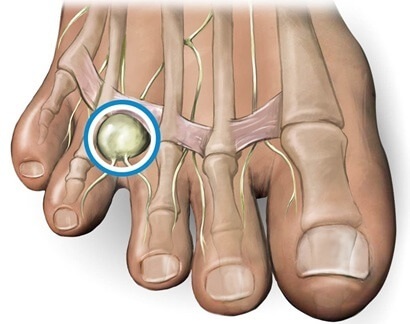
Morton’s neuroma is a classic cause of shooting pain in the ball of the foot which may spread to the toes, usually between the third and fourth toes.
It involves thickening of the tissue around a nerve, which leads to:
- Sharp or burning pain that shoots into the toes when walking
- A feeling of standing on a pebble or folded sock
- Pain triggered by tight or narrow shoes
- Relief when shoes are removed or the foot is massaged
The pain often comes in bursts rather than being constant.
Learn more about Morton’s Neuroma symptoms and treatment
2. Nerve Pain
Nerve-related problems tend to produce the most classic shooting pain in the foot.
Shooting nerve pain in foot isn’t usually from the foot at all, but comes from irritation higher up the nerve e.g. lower back.
What sets it apart is how the pain behaves:
- Pain that travels or radiates into the foot
- Electric, burning, or tingling sensations
- Symptoms that change with posture e.g. sitting, bending, standing
- Often associated with numbness or pins and needles
Shooting nerve pain in foot may be from:
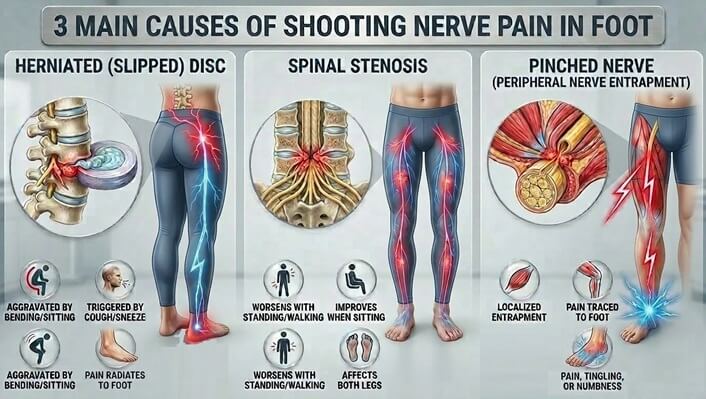
Herniated (Slipped) Disc
A bulging or herniated disc in the lower spine can press on nearby nerves, particularly the sciatic nerve. This can lead to pain that travels from the lower back or buttock all the way down into the foot. The pain is often sharp, shooting, and may be triggered by movements such as bending or sitting or actions such as coughing or sneezing.
Spinal Stenosis
Spinal stenosis occurs when the spaces in the spine narrow, placing pressure on the nerves. This can cause shooting pain in the foot, often accompanied by heaviness, numbness, or weakness in the legs. Symptoms are typically worse when standing or walking and improve when sitting or leaning forward.
Pinched Nerve (Peripheral Nerve Entrapment)
A nerve can become compressed anywhere along its path, often due to tight muscles, swelling, or surrounding tissues. This can cause localised or radiating shooting pain in the foot, sometimes with tingling or pins and needles.
You may also notice pain starting higher up in the leg or back and moving down into the foot.
Learn more about the different types of Nerve Pain In Foot and how to treat them.
3. Stress Fractures
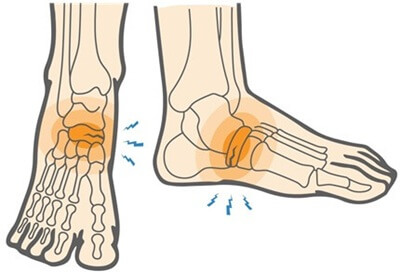
A stress fracture is a small crack in a bone caused by repetitive stress.
It can lead to sharp shooting pain in the foot, especially during activity.
Common stress fracture foot pain symptoms are typically:
- Focused in one small spot on the bone
- Worse with impact activities like walking or running
- Progressively increases over time rather than coming and going
- Associated with tenderness when pressing directly on the area
Pain shooting in the foot may occur when the bone is stressed, usually alongside a deep, aching pain.
Learn more about Stress Fracture Foot injuries.
/div>4. Foot Tendonitis
Foot tendonitis can cause shooting pain in different parts of the foot or along the outer or inner foot, depending on which tendon is involved.
Tendonitis occurs when the tendons become inflamed or overloaded, usually from overuse.
Common foot tendonitis symptoms are:
- Sharp pain that shoots when you move the foot or toes
- Discomfort along the line of a tendon rather than a joint
- Pain worse with repetitive activity e.g. walking, running, stairs
- Morning stiffness that eases with gentle movement
The location of the pain helps pinpoint which tendon is affected.
- Extensor Tendonitis: top of foot pain
- Peroneal Tendonitis: back and outer side of foot and ankle pain
- Posterior Tibial Tendonitis: inner foot pain
- Anterior Tibial Tendonitis: front foot pain
- Achilles Tendonitis: pain behind the heel
The pain is often activity-related and linked to movement rather than random.
Learn more about Foot & Ankle Tendonitis symptoms and treatment.
5. Plantar Fasciitis
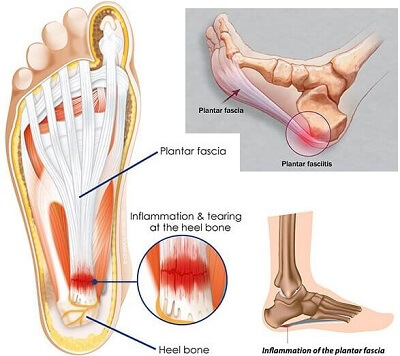
Plantar fasciitis can cause shooting pain under the foot, particularly on the inner side. It develops when the plantar fascia becomes irritated and tight, which can place stress on nearby nerves.
Plantar fasciitis usually causes deep, aching pain under the heel, but it can also trigger sharp shooting pain in the foot arch.
What makes plantar fasciitis distinctive is the timing of this shooting foot pain. It is typically:
- Worst with the first few steps in the morning or after rest
- Felt along the inner heel and medial arch
- Eases slightly as you walk, then worsens again with prolonged activity
The shooting sensation often occurs when the tight plantar fascia is suddenly stretched, particularly after periods of inactivity.
Learn more about Plantar Fasciitis symptoms and treatment.
6. Tarsal Tunnel Syndrome
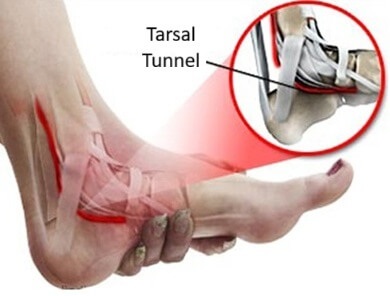
Tarsal tunnel syndrome causes shooting pain in the inner ankle and sole of the foot.
This is due to compression of the tibial nerve as it passes through the inside of the ankle.
Symptoms tend to follow a recognisable pattern:
- Tingling or numbness in the sole of the foot
- Burning or shooting pain along the inside of the ankle or arch
- Symptoms that worsen with prolonged standing or walking
- Pain that may persist even at rest or at night
Unlike plantar fasciitis, the pain is more nerve-like and less related to first-step stiffness.
Learn more about Tarsal Tunnel Syndrome causes and treatment.
7. Diabetic Neuropathy
Diabetic neuropathy typically causes shooting pain in the toes and feet often affecting both sides. It is a form of nerve damage caused by prolonged high blood sugar levels.
Diabetic neuropathy has a very distinct presentation:
- Pain shooting in foot combined with burning, tingling, or numbness
- Symptoms that start in the toes and gradually spread upwards
- Worse at night or when lying down
- Reduced sensation or a “numb” feeling in the feet
In more advanced cases, people may have less pain but more numbness, which increases the risk of injury.
Diagnosis & When To See A Doctor
In many cases, shooting pain in the foot will improve with simple treatment. However, it is important to seek medical advice if symptoms persist or worsen.
You should see a doctor if:
- The pain is severe or getting worse
- You have persistent shooting pain in foot for more than a few weeks
- There is numbness, weakness, or loss of sensation
- You struggle to walk or bear weight
- There are signs of infection (redness, heat, swelling)
- You have diabetes and develop foot pain
Diagnosis usually involves:
- A detailed history of your symptoms
- Physical examination of the foot and ankle
- Assessment of nerve function
- Imaging such as X-rays or MRI if needed
The goal is to identify whether the pain is coming from nerves, bones, tendons, or soft tissues.
Differential Diagnosis
- Shooting Pain Top Of Foot: extensor tendonitis, stress fracture, tibialis anterior tendonitis, nerve damage
- Shooting Pain Inner Foot: tarsal tunnel syndrome, posterior tibial tendonitis, nerve damage, plantar fasciitis
- Shooting Pain Outer Foot: 5th metatarsal stress fracture, peroneal tendonitis
- Shooting Pain Under Foot: plantar fasciitis, nerve damage, tarsal tunnel syndrome
- Shooting Pain In Toes/Ball Of Foot: Morton’s neuroma, nerve damage
- Shooting Pain Throughout Foot: Diabetic neuropathy
Treatment For Shooting Pain In The Foot
Treatment for shooting pain in the foot depends on the underlying cause, but the good news is that most cases improve with the right combination of simple treatments and targeted rehab.
The key is to address both the source of the pain e.g. nerve, tendon, bone and any contributing factors such as poor foot mechanics, tightness, or footwear.
#CommissionEarned from Amazon on qualifying purchases
1. Rest & Activity Modification
One of the most important first steps is reducing activities that trigger your symptoms.
If you are experiencing sharp shooting pain in the foot with walking, running, or standing, temporarily cutting back on these activities allows irritated tissues and nerves to settle.
That doesn’t mean complete rest. Instead, I recommend:
- Switching to lower impact activities e.g. cycling or swimming
- Avoiding movements that trigger shooting pain in foot
- Gradually reintroducing activity as symptoms improve
Pushing through sharp or shooting pain often makes things worse, particularly with nerve-related conditions.
2. Footwear Changes
Your shoes play a huge role in foot pain, especially with conditions like Morton’s neuroma, tendonitis, and plantar fasciitis.
Supportive footwear can:
- Reduce pressure on irritated nerves
- Improve foot alignment
- Absorb shock and reduce stress on tissues
Look for shoes with:
- A wide toe box to reduce pressure on the toes
- Good arch support
- Adequate cushioning
Avoid tight, narrow, or high-heeled shoes, as these can aggravate shooting pain in the toes and forefoot.
3. Ice & Pain Relief
If your pain is linked to inflammation e.g. tendonitis or plantar fasciitis, ice can be really helpful.
Apply ice for 10–15 minutes:
- After activity
- When pain flares up
Over-the-counter medications such as Ibuprofen can also help reduce pain and inflammation in the short term, but they shouldn’t be relied on long-term without medical advice.
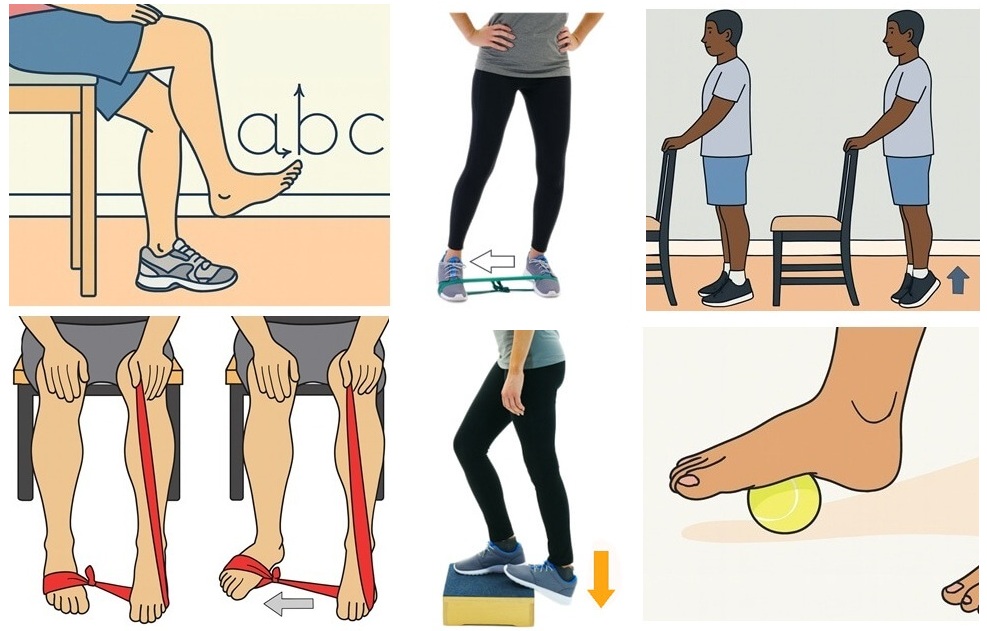
4. Stretching & Exercises
Targeted exercises are one of the most effective ways to treat and prevent pain shooting in the foot.
The right exercises will depend on the cause, but commonly include:
- Calf stretches to reduce tension through the foot
- Plantar fascia exercises for arch pain
- Nerve gliding exercises for shooting nerve pain in the foot
- Strengthening exercises for the foot and ankle
These help improve flexibility, reduce nerve irritation and support better foot mechanics.
5. Orthotics & Insoles
Orthotics (shoe inserts) can be very effective for redistributing pressure and supporting the foot.
They are particularly useful for:
- Plantar fasciitis
- Morton’s neuroma
- Abnormal foot mechanics
By improving alignment, orthotics can reduce strain on both soft tissues and nerves, helping to settle sharp shooting pain in the foot.
6. Physical Therapy
Physical therapy is one of the most effective treatments for persistent or recurrent foot pain.
Treatment may include:
- Hands-on therapy to reduce stiffness and tension
- Tailored exercise programmes
- Gait and movement analysis
- Advice on activity modification and footwear
For nerve-related pain, physical therapy can also address issues higher up the chain, such as the lower back or hip.
7. Medical Treatment
If symptoms are severe, persistent, or not improving, medical treatment may be needed.
Options include:
- Corticosteroid injections to reduce inflammation (commonly used for neuromas or plantar fasciitis)
- Prescription medications for nerve pain
- Immobilisation e.g. walking boot for stress fractures
In rare cases, surgery may be recommended, particularly if there is significant nerve compression or structural damage.
8. Treating The Underlying Cause
Long-term success depends on treating the root cause of your symptoms.
For example:
- Nerve pain may require addressing spinal issues or nerve compression
- Tendon problems need progressive loading and strengthening
- Stress fractures require adequate rest and gradual return to activity
- Diabetic neuropathy requires careful blood sugar control and foot care
If you are unsure what is causing your pain, it is worth getting a proper diagnosis so you can follow the most effective treatment plan.
Shooting Pain In Foot Summary
Shooting pain in the foot is usually a sign of irritation or damage to a nerve, but it can also be caused by problems in the bones or soft tissues.
The exact location and pattern of your pain provide important clues about the underlying cause.
Common causes include plantar fasciitis, Morton’s neuroma, stress fractures, foot tendonitis, nerve compression, tarsal tunnel syndrome, and diabetic neuropathy. While the pain can feel intense and worrying, most cases improve with the right treatment.
If your symptoms persist, worsen, or are associated with numbness or weakness, it is important to seek medical advice to get an accurate diagnosis and start appropriate treatment.
You may also be interested in the following articles:
Related Articles
Medical References
- Peripheral Neuropathy. NHS UK
- Morton's Neuroma- Current Concepts Review. NIH National Library Of Medicine.
- Complete Guide to Slipped Disc: Symptoms, Treatment, and Recovery. The UK Spine Centre
- What Might Cause a Sharp Leg Pain that Comes and Goes. Healthline
- Sharp Shooting Pain in Leg Like Electric Shock: Causes and Treatments. Optimal Wellness Centre
Page Last Updated: 24th March, 2026
Next Review Due: 24th March, 2028

Visitor Comments
"Thank you so much! Your website is a fountain of information!" Retha, US
"Your info took me straight to the problem. Well described and clearly explained." Rick, US
"Thanks for having these exercises available! I performed a few and they have helped tremendously with my foot pain." Jennifer, UK
"I have suffered these symptoms for over a year, seen two doctors and a physio. None of them diagnosed this." Lezlee, UK
"Very interesting! All good information. Tried a few stretches, already feels good." Cindy, US
"3 days ago I thought I was going to need foot surgery. I NEVER thought that stretching my calf would relieve the excruciating pain at the top of my foot. Thank you!!" Rich, US
The material on this website is
intended for educational information purposes only for the general public.
It should not delay or
substitute medical advice, diagnosis or treatment.
© foot-pain-explored.com 2013-2026
Updated 24th March 2026
Foot-Pain-Explored.com is a trading name of Wilson Health Ltd. All rights reserved. Terms & Conditions apply

Contact Us About Us Blog Privacy Policy Advertising Policy Sitemap